

Best Winter Tires in Canada for the 2025–2026 Season
Driving in Canadian winters means facing snow, slush, ice and freezing rain conditions that demand more than just all season tires. In fact, studies show that over 70% of drivers now switch to the best winter tires in Canada each year and for good reason.
Once temperatures dip below 7°C, all season tires lose flexibility, reducing traction and making braking less reliable. Winter tires, on the other hand, are built with specialized rubber compounds and tread designs that stay flexible in the cold, giving you better grip, shorter stopping distances and greater control on icy roads.
If you’re preparing for the season, this guide will help you find the best winter tires for your vehicle whether you drive a car, SUV or pickup truck.
What Are the Best Winter Tires in Canada?
If you’re wondering “what are the best winter tires in Canada?” The answer isn’t one-size-fits-all. It depends on your vehicle type, driving habits, budget and local climate. For example, a daily GTA commuter driving through slush needs strong wet-ice braking, while Prairie drivers tackling deep snow should consider tires with aggressive tread or even good studded winter tires where legal. In regions like Northern BC or Quebec, durability in extreme cold becomes the priority.
To determine the best winter tires Canada has to offer, drivers must consider their specific needs. According to Canadian tire and automotive experts, the top recommendations for the 2025–2026 season consistently highlight three leading families of winter tires for passenger cars and SUVs, including some of the best snow tires for SUV models, each offering proven reliability, traction and safety on icy Canadian roads.
Why good winter tires matter in Canadian winters
Below 7°C, all-season compounds stiffen, lengthening braking distances. Winter tires stay flexible, add sipes and biting edges and move slush out of the contact patch.
Key Benefits of Winter Tires:
- Safer braking: Noticeably shorter stopping distances on icy and snowy roads.
- Improved handling: Better steering response and overall driving confidence.
- Greater stability: Reduced risk of skidding during freeze thaw conditions.
- Accident prevention: Helps reduce collisions, injuries and fatalities in harsh weather.
- Insurance perks: Many insurers offer discounts (up to 5%) when you install winter tires.
- Road safety: Contributes to safer driving for you and everyone else on Canadian roads.
When it comes to safety, the best tires for the winter are always dedicated snow tires, not all-season.
Myth-buster: 4WD/AWD, ABS and stability control help you go, but they don’t help you stop. Tires do.
Top Things to Know About Winter Tires in Canada
- 3 out of 4 Canadian drivers now install winter tires each year.
- They can dramatically improve traction, braking and control in snow and ice.
- Many insurers offer up to 5% savings when you install winter tires.
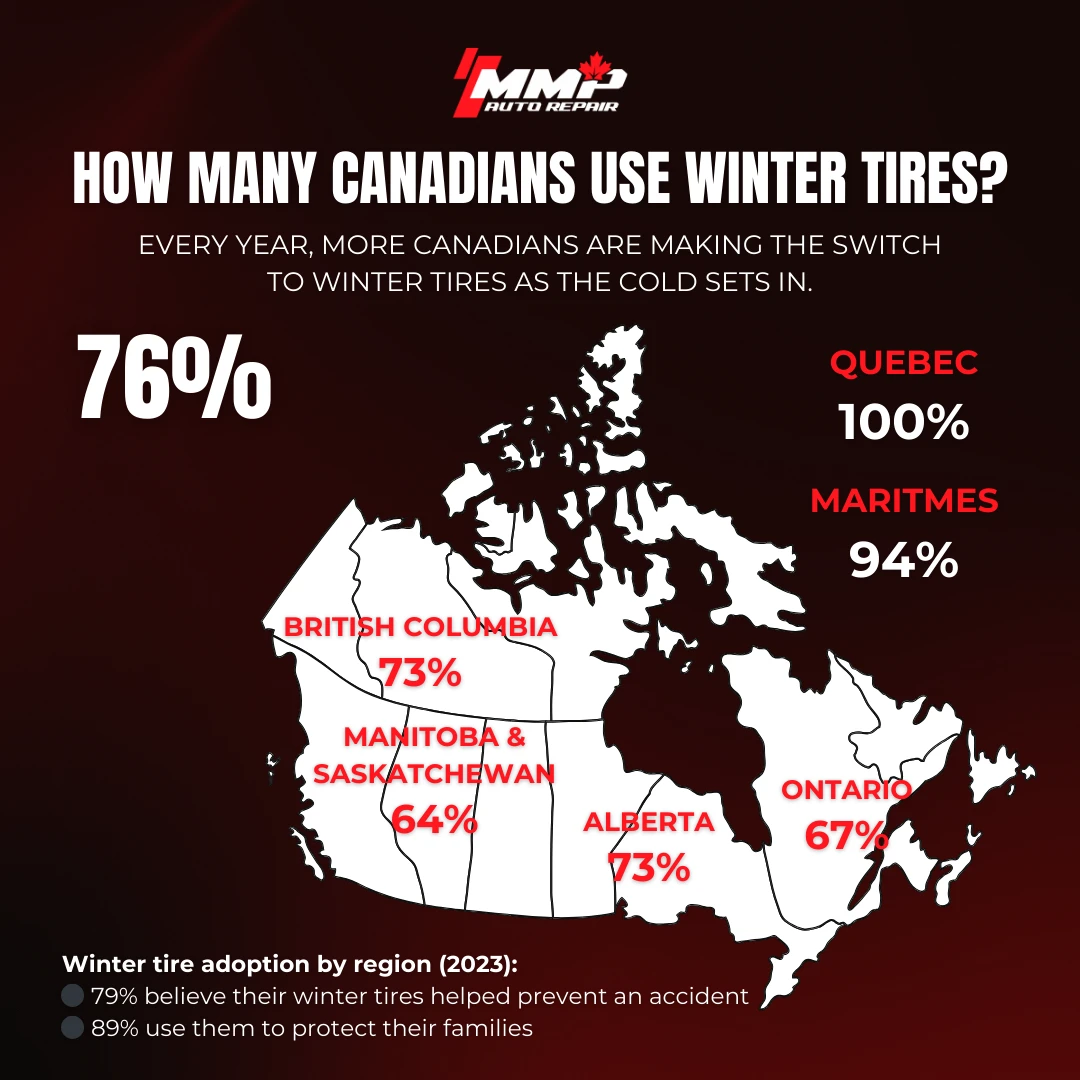
How Many Canadians Use Winter Tires?
Every year, more Canadians are making the switch to winter tires as the cold sets in. According to the Tire and Rubber Association of Canada (TRAC) (Source), 76% of drivers nationwide now use winter tires, a steady increase from just a few years ago.
Here’s a look at winter tire adoption by region (2023):
- Canada-wide: 76%
- Quebec: 100% (mandatory)
- British Columbia: 73%
- Ontario: 67%
- Alberta: 73%
- Manitoba & Saskatchewan: 64%
- Maritimes: 94%
Beyond statistics, the majority of drivers say winter tires give them peace of mind. In fact, 79% believe their winter tires helped prevent an accident and 89% use them to protect their families by improving traction, braking and overall safety.
Why Some Canadians Still Don’t Use Snow Tires?
Even though winter tire use is increasing across the country, about 4 in 10 Canadian drivers still don’t make the switch. Surveys show several reasons why:
- “All season tires are good enough” – 58% of drivers still believe their all season tires can handle winter roads.
- Limited driving needs – 21% say they don’t drive enough in the winter to justify the expense.
- Cost concerns – 27% see the upfront price of winter tires as a barrier.
- Storage space – 10% don’t have room to store an extra set of tires.
- Other factors – 11% mention personal preferences or other reasons.
While these concerns are common, the reality is that winter tires consistently prove safer in Canadian winters, offering shorter stopping distances, better traction and sometimes even insurance discounts.
Best winter tires Canada: top picks by vehicle
To make this best rated winter tires Canada guide practical, we’ve organized recommendations by vehicle type and driving needs. Whether you drive a compact car, SUV or heavy-duty pickup, these are the top performing options for Canadian winters. If you’re shopping for the best snow tires for Canadian winters or premium all-weather options, here are the top-rated choices by vehicle type.
Best Winter Tires for Cars (Sedans & Hatchbacks)
Ice specialist: Bridgestone Blizzak WS90 – excellent on black ice and hard-packed snow.
Balanced all-rounder: Michelin X-Ice Snow – proven grip, durability and comfort.
Urban wet-snow performer: Continental VikingContact 7 – reliable for city driving and slush.
Best budget car tires: General Altimax Arctic 12 and Firestone Winterforce 2 – affordable yet dependable.
Best Winter Tires for SUVs & Crossovers
Deep-snow confidence: Bridgestone Blizzak DM-V2 – built for traction in heavy snowfall.
Quiet commuter option: Michelin Latitude X-Ice – smooth, quiet and fuel-efficient.
Value choice: Toyo Observe GSi-6 or Hercules Avalanche RT – solid performance at a lower price point.
Top rated winter tires for SUV option: Nokian Hakkapeliitta series – ideal for northern drivers facing extreme cold and ice.
Best Winter Tires for Pickup Trucks
Work + snow: Goodyear Wrangler Duratrac – aggressive tread for job sites and winter highways.
Heavy-duty durability: Toyo Open Country WLT1 – tough build for extreme conditions.
Good value option: Cooper Discoverer Snow Claw – reliable traction without the premium price tag.
Top Rated Studded Winter Tires in Canada
A good rule of thumb is simple: change your winter tires once daytime temperatures stay above 7°C.
For drivers facing extreme ice and hard-packed snow, studded winter tires provide the best possible grip. These tires have small metal studs embedded in the tread, helping them dig into icy surfaces for improved traction and shorter stopping distances.
Things to know about studded tires in Canada:
Best for: Northern regions, rural highways and areas with long freeze–thaw cycles.
Downsides: They can be noisy on dry pavement and may wear roads faster.
Laws: Studded tire regulations vary by province. Some provinces allow them only between specific dates (e.g., October to April), while others restrict or ban them on certain roads. Always check local rules before buying.
Best Winter Tire Brands in Canada
When it comes to safe winter driving, choosing the right and best winter tire brands matters just as much as the model. At MMP Auto Repairs in Oakville, we work with some of the most trusted and best winter tire brands worldwide, offering options for every vehicle type, including the best budget winter tires to suit your needs.
Here are the brands we carry and recommend:

Michelin
Premium performance, known for the popular X-Ice Snow series.

Bridgestone
Blizzak family, a Canadian favourite for ice and slush.

Continental
Viking Contact line for excellent wet and snow traction.

Goodyear
Strong all-around winter tires, including the Wrangler series for trucks.

Pirelli
High-performance snow tires, ideal for luxury and sport vehicles.

Dunlop
Reliable winter handling with solid ice performance.

Firestone
Affordable, dependable options like Winterforce.

General Tire
Budget-friendly snow tires such as Altimax Arctic.

Hankook
Innovative designs like Winter i*cept for balanced winter driving.

Toyo Tires
Trusted in Canada for SUVs and trucks, including the Observe GSi-6.

Yokohama
Excellent grip and control in snowy city conditions.

BFGoodrich
Strong, durable winter tires with all-terrain options, making them among the best pickup winter tires for tough Canadian conditions.

Uniroyal
Cost-effective and best rated snow tires with reliable safety features.

Lassa
European-engineered tires designed for challenging winter roads.

Avon Tyres
Performance-focused with dependable winter grip.

Riken
Value brand backed by Michelin technology.

Maxxis
Known for rugged durability, especially on trucks and SUVs.
Whether you need premium winter tires or affordable good snow tire brands options, these brands cover everything from compact cars to heavy-duty trucks.
Ever wondered what that glowing dashboard warning really means? Check out our latest blog: What Does Your Check Engine Light Mean?
What Are Winter Tire Ratings?
When shopping for best rated snow tires, it’s not just about the brand name, it’s about how each tire performs under real winter conditions. That’s where winter tire ratings come in.
At MMP Auto Repairs in Oakville, we recommend checking ratings that cover:
- Dry and wet handling – how the tire responds on clear or rainy pavement.
- Ice and snow traction – braking, cornering and acceleration in slippery conditions.
- Comfort and road noise – ensuring a smoother, quieter ride.
- Tread life and mileage – how long the tire will last before replacement.
These ratings are based on independent tests on closed tracks by industry experts, giving you a reliable way to compare options. By reviewing winter tire ratings, you can choose the set that matches your vehicle type, driving style and local weather conditions.
All season tires vs winter tires vs all weather tires
| Tire Type | Temperature Target | Strengths | Watch-outs |
|---|---|---|---|
| All season tires | >7°C | Longevity, comfort | Not ideal for ice/snow; “M+S” ≠ winter-rated |
| All weather tires | Mixed / mild winters | 3PMSF rated, one-set convenience | Not as strong as dedicated best winter snow tires in extreme cold |
| Winter tires | <7°C, snow/ice | Best braking & traction | Swap out in spring; storage needed |
Are all season tires good for winter? In most of Canada, the answer is no, it’s safer to choose winter or all-weather tires. For drivers who prefer to avoid seasonal swaps, the best all year round tires are all-weather models with the 3PMSF symbol.
How to choose winter tires in Canada
How to Pick the Right Winter Tire Size
Check your vehicle guide: Start with the door-jamb sticker or your owner’s manual, which lists the recommended tire size. Some vehicles also suggest an alternate winter tire size for better performance.
Consider minus-sizing: Many Canadian drivers choose to go with a narrower, taller tire profile (known as minus-sizing). This can help cut costs, improve traction in deep snow and offer extra protection for your rims.
Should You Downsize Your Winter Tires?
In many cases, downsizing makes sense. Using smaller rims with taller sidewalls can lower costs, improve traction in deep snow and help protect your rims from winter potholes. Just make sure there’s enough brake-caliper clearance and that the overall tire diameter stays close to the factory specification.
Tires, Rims & TPMS: What You Need to Know
Winter tires with rims: Buying a dedicated set of rims for your snow tires makes seasonal swaps faster, reduces bead wear and saves money on installation over time.
TPMS sensors: If your vehicle has a Tire Pressure Monitoring System (TPMS), consider adding sensors to your winter rims. This prevents dashboard warning lights and ensures you can still track tire pressure in cold weather.
How to Identify Snow Tires
To make sure you’re buying true winter tires, always check for the Three-Peak Mountain Snowflake (3PMSF) symbol on the sidewall. This marking confirms the tire has been tested and certified for severe snow conditions.
Note: The M+S (Mud + Snow) label alone is not an official winter tire certification.
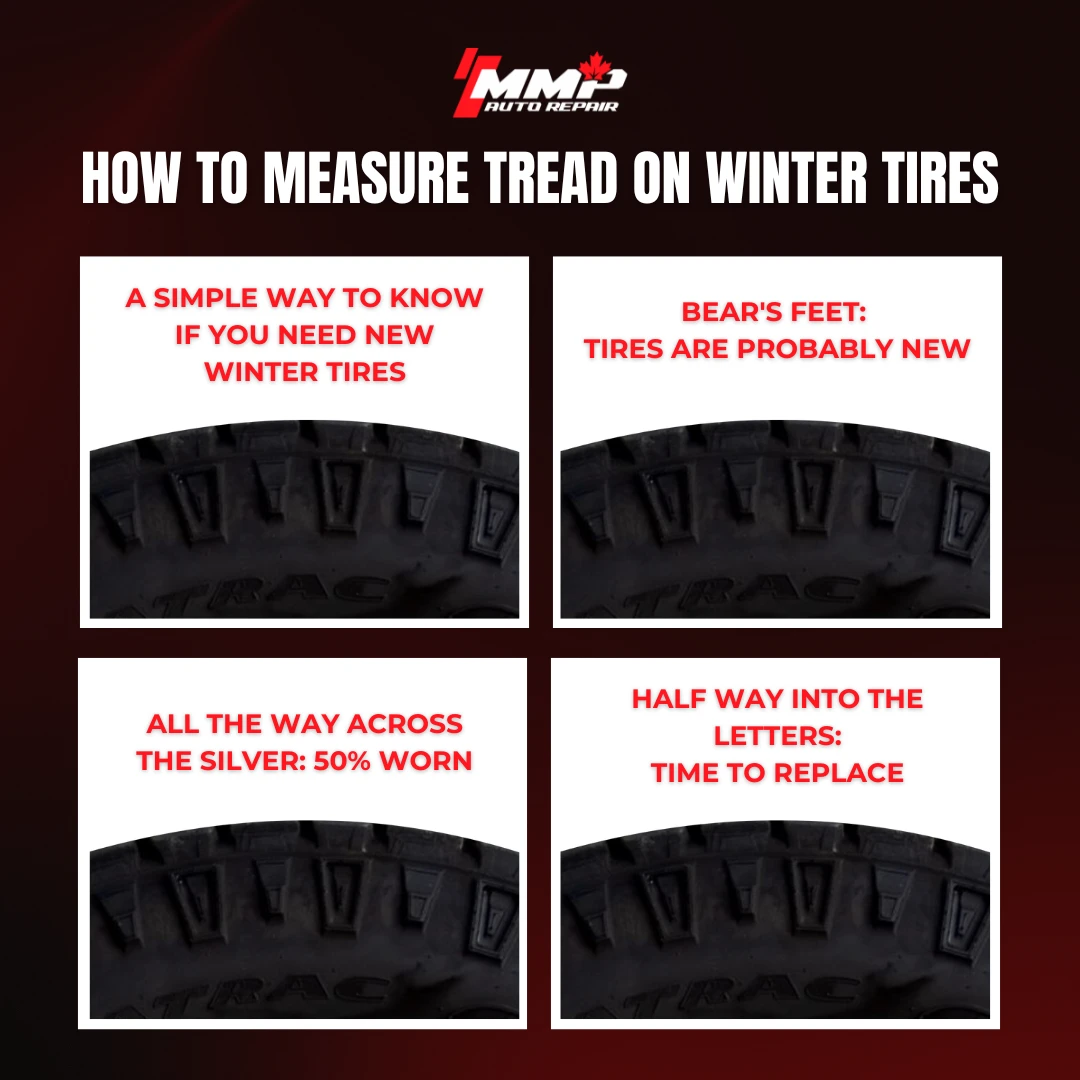
How to Measure Tread on Winter Tires (Toonie Test)
Keeping enough tread depth is critical for safe winter driving. A quick way to check is the Toonie Test:
- If the silver outer rim is fully covered → your tread is in good condition.
- If the tread covers only the letters → your tires are nearing replacement.
- If the tread doesn’t reach the letters → it’s time to replace your tires immediately.
For Canadian winters, always aim for at least 4 mm of tread depth to maintain reliable traction on snow and ice.
How Much Do Winter Tires Cost in Canada?
The price of winter tires in Canada can vary based on brand, size and performance level. On average, here’s what you can expect to pay per tire (before installation and TPMS sensors):
- Affordable snow tires: $120 – $160
- Mid-range options: $160 – $220
- Premium brands: $220 – $320+
Pro Tip: Investing in wheels and snow tires packages can save you money long-term. They make seasonal swaps faster, reduce wear on your rims and lower installation costs over time.
Winter Tire Deals & Where to Buy
- Shop early: The best time to buy winter tires is in late September to October, before inventory sells out and prices rise.
- Look for promotions: Many retailers offer winter tires for sale with rebates, free balancing or even seasonal storage deals.
- Compare before you buy: Prices can vary widely between local shops, big chains and online retailers. A quick comparison can save you a lot.
- Check ratings, not just price: The cheapest tire isn’t always the safest. Always check winter tire ratings for traction, braking and durability.
- Focus on long-term value: A slightly higher upfront cost on a quality tire can save you money over time with better performance and longer tread life.
- Consider used tires cautiously: If you’re looking at used winter tires, check the tread depth, age (DOT code) and overall condition before buying.
- Where to buy winter tires:
Local independents → Personalized service and expert advice (✅ like MMP Auto Repairs).
Big chains → Larger inventory and frequent sales.
Trusted online retailers → Convenient bundled packages (mount + balance).
At MMP Auto Repairs in Oakville, we offer everything you need: winter tire changes, tires with rims, snow tire ratings guidance, storage solutions and competitive quotes to keep your winter driving safe and affordable.
How Long Do Winter Tires Last?
On average, winter tires last between 4–6 seasons or roughly 20,000–30,000 km, depending on how much and how aggressively you drive. Their lifespan also depends on proper rotation, alignment and storage practices.
You should consider replacing your winter tires if you notice:
- Tread depth less than 4 mm (below this, traction drops significantly).
- Cracked or dried-out sidewalls, often caused by age or improper storage.
- Uneven wear patterns, which may indicate alignment or suspension issues.
Tip: Rotating your tires every season and storing them in a cool, dry place can help maximize their lifespan.
How Do You Store Winter Tires?
Proper storage is key to extending the life of your winter tires. Follow these simple steps:
- Clean thoroughly: Wash off any salt, dirt and road grime, then let the tires dry completely.
- Bag individually: Place each tire in a storage bag, squeeze out excess air and seal to reduce moisture exposure.
- Choose the right environment: Store in a cool, dry and dark area, away from direct sunlight or heat sources.
- Position correctly:
On rims → Stack tires horizontally (flat, one on top of the other).
Without rims → Store vertically and rotate their position every month to prevent flat spots. - Consider professional storage: If space is limited, take advantage of winter tire storage services at MMP Auto Repairs in Oakville for safe, climate appropriate care.
Want the full breakdown of winter tire laws in every province? Click here to read our complete guide on winter tire laws in Canada
Winter tire change: when should you put on winter tires?
- Rule of 7: Schedule your winter tire change when daily temps hover at or below 7°C.
- Regional timing (typical):
BC coast & GTA: Late Oct–early Nov
Prairies/Interior BC/Northern ON: Mid–Oct
QC/Atlantic Canada: Mid–Oct to late Oct - Book early to avoid appointment backlogs.
Conclusion: Choosing the Best Winter Tires in Canada
Canadian winters are tough, but the right winter tires make driving safer, smoother and more predictable. From cars to SUVs and trucks, there’s a tire for every need and budget.
At MMP Auto Repairs, we offer expert installation, storage and the best winter tire deals to keep you safe all season. Book your winter tire appointment today and drive with confidence this winter.
Frequently Asked Questions About Winter Tires
1. Do winter tires come with rims?
Usually, winter tires are sold without rims. Many drivers choose to buy winter tires with rims because it makes seasonal swaps quicker, reduces wear on the tires and saves on long-term installation costs.
2. Do you need winter tires in BC (British Columbia)?
Yes, in B.C. winter tires (or M+S tires with 3.5 mm tread) are required on many highways from October 1 to April 30. City driving rules vary, so always check local signage.
3. What should I look for when buying used winter tires?
Check the tire’s age (DOT code – under 6 years is best), tread depth (at least 6 mm), and make sure there’s even wear with no sidewall cracks or plugs. Also confirm the 3PMSF (snowflake symbol) is present.
4. Can I use summer tires in the winter?
No, summer tires harden in cold temperatures and lose almost all traction on snow and ice. For Canadian winters, use winter or all-weather tires.
5. When should I put on winter tires in Canada?
The best time to install winter tires is when temperatures consistently stay at or below 7°C. Don’t wait until the first snowfall traction starts dropping as soon as it gets colder.
6. Are Continental winter tires good for Canadian winters?
Yes, Continental winter tires are highly rated for Canadian winters. They provide strong grip on ice and snow, shorter braking distances and reliable handling in freezing conditions. Many Continental snow tires models carry the 3PMSF (Three-Peak Mountain Snowflake) symbol, ensuring they meet strict winter safety standards. They deliver durability, comfort and proven winter performance.
7. When do you need to put on snow tires?
Follow the same 7°C rule. That means switching to the best snow tires in Canada in mid-to-late October to be ready before the first storm.
8. Where is the best place to buy winter tires in Oakville?
You can buy winter tires in Oakville from MMP Auto Repairs, big national retailers or reputable online stores. Local shops often provide personalized service, installation and even tire storage options.