
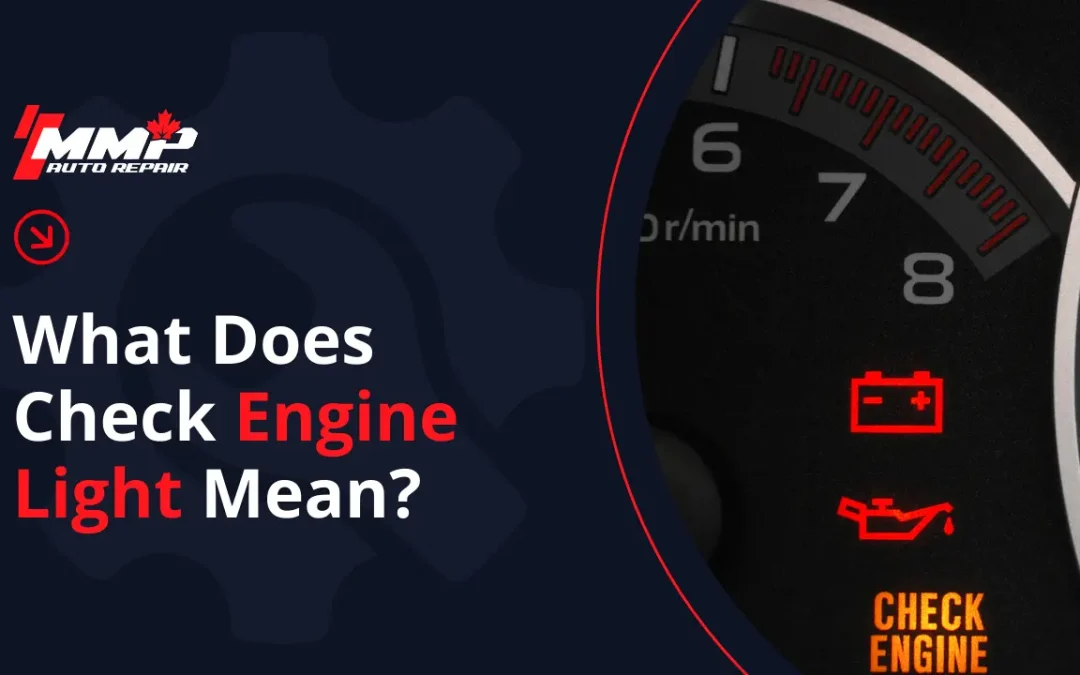
Few things worry drivers more than seeing that little orange or yellow check engine light glow on the dashboard. Whether you call it the car engine indicator light, engine check warning, or simply the engine light on, one thing is clear: it means your vehicle needs attention.
But don’t panic. The check engine light can signal a wide range of issues — some serious, others simple and quick to fix. Here, we’ll break down what the light means, the typical causes and the best actions to take if it comes on.
Don’t Panic: What the Check Engine Light Really Means
Few things make drivers more anxious than seeing the car engine indicator light or check engine symbol glow on the dashboard.
But here’s the good news: most of the time, your car won’t break down immediately. A check engine light on doesn’t mean disaster, it’s simply your vehicle’s way of saying “Hey, something’s not quite right.”
At MMP Auto Repair, we know how stressful this warning can feel. Let’s break down the check engine light meaning, common causes and what steps you should take if yours comes on.
Why Is My Check Engine Light On?
This is one of the most common driver questions: “Why did my engine light come on?”
The truth is, there isn’t just one answer. It could be due to fuel, emissions, sensors, or engine performance issues.
9 Common Reasons Your Check Engine Light Might Be On – MMP Auto Repair
When your check engine light turns on, it can feel stressful but not every cause is a major repair. At MMP Auto Repair, we help drivers in Oakville quickly diagnose and fix the issue. Here are the nine most common reasons your light may be illuminated:
Loose Fuel Cap
One of the simplest fixes. If the cap isn’t tightened properly (listen for the click) or was left off, your check engine light may come on.
Oxygen Sensor Failure
Oxygen sensors monitor your exhaust system. A failing sensor or faulty reading often triggers the light and usually requires replacement.
Other Emissions Problems
The exhaust system, catalytic converter, mass airflow sensor (MAF) or leaks – is a frequent culprit. An inspection helps pinpoint the issue.
Spark Plugs or Ignition Coils
If plugs or coils are worn, your engine may misfire, leading to reduced performance and an illuminated warning.
Wiring Issues
Loose connections, damaged wires or ignition system faults can disrupt engine function and cause the light to appear.
Transmission Problems
Transmission trouble – whether overdue fluid service or internal damage can activate the check engine light alongside other warning signals.
Cooling System Malfunctions
An overheating engine often shows a temperature warning, but cooling system faults can also trigger the check engine light.
Fuel System Concerns
Clogged filters, contaminated fuel or improper fuel delivery may impact performance and cause the light to come on.
Engine Oil Issues
Low, dirty or leaking oil affects engine health and may be the reason your light is on. An oil change or leak repair may solve it.
Understanding the Check Engine Light Symbol
The engine icon (often orange, yellow or red) appears when your car’s On-Board Diagnostics (OBD-II) system detects a fault.
Colour & Urgency Guide
| Light Colour | Meaning | What To Do |
|---|---|---|
| Yellow/Orange | Minor-to-moderate issue (sensor, emissions, fuel cap) | Safe to drive short-term, but book service soon |
| Red | Serious issue (engine overheating, major failure) | Pull over safely and call for help |
| Flashing | Urgent danger (possible catalytic converter damage) | Stop immediately, tow to repair shop |
Is It Safe to Drive with the Engine Light On?
The answer depends on what the car is doing.
Check engine light on but the car runs fine? Safe to finish your trip, but schedule service soon.
Flashing or red light? Pull over immediately continuing could damage your engine.
What to Do When the Check Engine Light Comes On
Step 1: Stay Calm
No need to panic – most issues are minor.
Step 2: Check Easy Fixes
Tighten the gas cap.
Check oil and coolant levels.
Think about your last fuel-up — bad gas can trigger a light.
Step 3: Observe Symptoms
Does the car feel normal? Or is it stalling, vibrating or making noise?
Step 4: Call the Pros
If the light stays on or flashes, contact MMP Auto Repair at (905) 842-5277.
Does the Check Engine Light Come On for Oil Change?
A common question drivers ask is: “Can the check engine light come on for oil change?”
The short answer is no — most vehicles have a separate maintenance required light (sometimes shown as a wrench or service reminder) that tells you when it’s time for an oil change. This is different from the check engine light, which signals a fault in your engine, emissions or sensors.
However, there are a few exceptions:
- If your oil level is extremely low, the car’s computer may trigger the engine indicator light on.
- If dirty or degraded oil affects engine performance, it could also cause the light to appear.
- In rare cases, a faulty oil pressure sensor may confuse drivers into thinking it’s an engine problem.
Bottom line: The check engine light is not a direct reminder for oil changes. But since oil affects the engine’s health, neglecting oil changes can eventually trigger engine problems that make the light come on.
Check Engine Light vs Maintenance Required Light
It’s easy to confuse the two.
- Check Engine Light = A problem detected in your engine, emissions, or sensors.
- Maintenance Required Light = Reminder for routine service (like an oil change).
If your check lights on the dashboard appear, don’t assume it’s just maintenance — it could be more serious.
Can You Reset the Check Engine Light Yourself?
Yes — some drivers try:
- Disconnecting the battery
- Using an OBD-II scanner
But here’s the catch: this only clears the light. If the root problem isn’t fixed, the engine check light will come back.
At MMP Auto Repair, we use advanced diagnostic tools that go beyond basic scanners, finding the real cause.
How Mechanics Diagnose the Check Engine Light
When you visit MMP Auto Repair, our technicians:
- Scan your vehicle with professional OBD-II diagnostic tools
- Retrieve fault codes from the car’s computer
- Pinpoint the exact issue (sensor, wiring, fuel, ignition or emissions system)
This saves time, prevents guesswork and ensures repairs are done right the first time.
Why You Shouldn’t Ignore the Check Engine Light
Ignoring your motor light on can lead to:
- Poor fuel economy
- Higher emissions
- Costly repairs (a $20 gas cap issue could turn into a $2,000 catalytic converter repair)
- Failing your next car inspection
A Brief History of the Check Engine Light – MMP Auto Repair
Before the mid-1990s, automakers each used their own engine diagnostic systems, mainly to comply with EPA pollution-control rules. These systems weren’t standardized and often required brand-specific tools and expertise to figure out why a check engine light was on.
That changed in 1996, when manufacturers began standardizing under the OBD-II protocol. This system introduced a universal connector – usually located under the steering column and a set of diagnostic trouble codes (DTCs). For the first time, technicians could plug into any vehicle with the same tool to quickly read codes and pinpoint issues.
At MMP Auto Repair, our team uses this technology to identify and repair problems efficiently, saving you time and stress whenever your check engine light comes on.
Quick Takeaways
- When the check engine light comes on, it means your car’s computer noticed something isn’t right.
- Causes range from a loose gas cap to a serious engine malfunction.
- A yellow or orange check engine light signals a minor problem, but you should book a service appointment shortly.
- Red or flashing light = stop driving and call a mechanic.
- Visit MMP Auto Repair for accurate diagnostics and trusted repairs.
Conclusion: Don’t Ignore the Check Engine Light
The check engine symbol on your dashboard isn’t just an inconvenience, it’s your vehicle’s built-in warning system. Whether it’s something simple like a loose gas cap or a more serious engine problem, dealing with the issue early helps you avoid expensive repairs, reduces stress and keeps your car safe on the road.
If your check engine light is on, don’t put it off. Contact MMP Auto Repair today. Our certified technicians use advanced diagnostic tools to find the root cause quickly and provide honest, reliable repairs that Canadian drivers can trust. With us, you’ll get peace of mind knowing your vehicle is in expert hands.
Frequently Asked Questions About the Check Engine Light
1. What is the most common reason the check engine light comes on?
The most common cause is a loose or faulty gas cap. Other frequent reasons include a bad oxygen sensor, worn spark plugs or a failing catalytic converter. These issues can affect fuel economy and emissions, so it’s best to get them checked.
2. How do I know if my check engine light is serious?
Look at the light’s behaviour and your car’s performance:
Solid yellow or orange light → Likely a minor issue, but should be inspected soon.
Flashing or red light → Serious problem. Stop driving and call a mechanic right away.
The car runs rough or makes noises → Consider it urgent, even if the light isn’t flashing.
3. Is it okay to drive if the check engine light is on?
It depends:
If the check engine light is solid and your car runs fine, you can usually drive short distances safely.
If the light is flashing or red, or the car feels weak, shaking, or noisy, it’s not safe to keep driving. Pull over and get help.
4. What is the best thing to do when a check engine light comes on?
Here’s what to do step by step:
Stay calm — it doesn’t always mean a major failure.
Check simple things first: tighten the gas cap, check oil and coolant levels.
Pay attention to symptoms: Is the car running normally or struggling?
Book a diagnostic check with a mechanic like MMP Auto Repair to find the root cause.
5. Can check engine light come on for an oil change?
Not usually. Cars have a separate maintenance required light for oil changes. However, if your oil is dangerously low or the oil pressure sensor detects a problem, the engine indicator light may appear.
6. What’s the difference between the maintenance light and the check engine light?
Maintenance Required Light → Reminder for routine service (like oil changes or filter replacements).
Check Engine Light → A warning that your car’s computer has detected a fault in the engine, sensors, or emissions system.
7. Why does my check engine light sometimes turn on and then off?
This can happen if the problem is temporary. Common reasons include:
Using bad gas or the wrong fuel grade
Moisture in the electrical system
Loose or faulty gas cap
If the light turns off but keeps coming back, schedule a professional inspection.